Nov 30, 2015 |
On this week’s Firsts in Fiction podcast, we’ll be chatting with author/editor Kathy Ide about Holiday Fiction and the dos and don’ts of writing about popular holidays. You can watch the live stream and join the chat every Tuesday evening at 6:30 PST.
On today’s blog, Kathy shares her ideas for maintaining your credit as a writer:
The buzz word in publishing is platform. And for good reason. Authors need to get the word out about their books. After all, if no one knows about them, no one will buy them.
But there’s another “p word” that, in my opinion, is even more important than platform. It’s proofreading. No matter what you write or how you choose to publish your work, typos, inconsistencies, and mistakes in punctuation, usage, grammar, and spelling (what I call “PUGS”) will brand you as an amateur. And that will affect your sales as much as, or more than, your platform.
- Proofread your manuscript.
Before you submit a manuscript to a publisher (book, magazine, or other), check it carefully for typos, inconsistencies, inaccuracies, and PUGS errors. And make sure you use the appropriate style guide and dictionary for the type of publisher you’re submitting to.
If you plan to self-publish, you’ll need to proofread even more carefully, because you won’t have a publisher’s in-house proofreaders to check your work before readers see it.
- Proofread your queries and proposals.
The content of your manuscript might be brilliant, and you could have a fantastic platform. But if an acquisitions editor notices typos, inconsistencies, inaccuracies, and PUGS errors in your query or proposal, you won’t be presenting a very polished, professional image. And the editor will likely be thinking about how much time it would take their proofreaders to fix all those mistakes. If another proposal she’s considering has fewer errors, she may very well choose that one instead of yours.
- Proofread your galleys.
The term galleys refers to the final version of your manuscript before it goes to print. This is your last chance to catch typos, inconsistencies, inaccuracies, and PUGS errors before your readers see what you’ve written. Don’t rely on the publisher’s in-house editors or proofreaders. Even professionals can miss things.
- Proofread your back cover copy.
A friend of mine once picked up a book at a bookstore and noticed a typo on the back cover. When she reported it to our critique group, she didn’t say she’d found a mistake on a book published by “XYZ Publishers.” She said she found the mistake on a “Jane Doe” novel. She didn’t connect the error to the publishing house but to the author.
- Proofread your promotional material.
As you’re creating promotional flyers, blogs, social media posts, handouts for your talks, even e-mails you plan to send to colleagues in the industry, read through them multiple times to check for typos, inconsistencies, inaccuracies, and PUGS errors. Your reputation, and your book sales, will be affected—positively or negatively.
For a lot of avid readers, typos and inconsistencies practically jump off the page. And many are familiar with the rules of punctuation, usage, grammar, and spelling. If your reader knows the rules and you don’t, that’s not going to make you look very professional.
Readers who find a lot of mistakes in a book will not be as likely to recommend that book to their friends. And who knows? A creative writing teacher might just read your book and want to recommend it to her students . . . but she probably won’t do that if there are a lot of mistakes in it.
Most people have a hard time finding typos and inconsistencies in their own writing, because the eye tends to see what the mind expects to see. And many new writers aren’t familiar with the reference books that publishers use for punctuation, usage, grammar, and spelling. That’s why I wrote Proofreading Secrets of Best-Selling Authors. It has tips from multi-published authors on how to catch typos, inconsistencies, and inaccuracies. It also contains industry-standard guidelines on the PUGS issues that most writers struggle with.
Once you’ve got your manuscript, galleys, or promotional material as polished as you think they can be, you may wish to consider hiring a professional proofreader. I’m not talking about your neighbor who’s a high school English teacher, but someone who knows and understands the publishing industry’s requirements. You can find professional freelance proofreaders at writers’ conferences or by filling out the form for Authors Seeking Editors at the Christian Editor Connection (www.ChristianEditor.com).
The investment you make in proofreading could make a tremendous difference in the success of your writing journey.
Kathy Ide is a published author/ghostwriter, editor/mentor, and writers’ conference speaker. In addition to being the author of Proofreading Secrets of Best-Selling Authors, she is the editor/compiler for the new Fiction Lover’s Devotional series. Kathy is the founder and coordinator of The Christian PEN: Proofreaders and Editors Network (www.TheChristianPEN.com) and the Christian Editor Connection (www.ChristianEditor.com). To find out more about Kathy, visit www.KathyIde.com.

21 Days of Christmas
Kathy’s newest book, 21 Days of Christmas, is now available through her website, Amazon, and many bookstores across the country.
Join Kathy Ide, Aaron Gansky, Alton Gansky, and myself for this week’s Firsts in Fiction podcast on Google Hangouts. Have a question for the authors? Visit Aaron’s website for Ask The Author and if he uses your question on air this week, you’ll get a code for a free audio download of his novel, The Bargain.

The Bargain by Aaron D. Gansky
And Frankly, My Dear . . . that’s all she wrote!
Nov 2, 2015 |
Hey peeps.
So, I’m hoping by now y’all know I’m also working behind the scenes social media for Kathy Ide. I was blessed to meet her at the Orange County Christian Writers Conference in April.
Well, one of the first tasks I get to do is help promote her newest book giveaway.
21 Days of Christmas
The Fiction Lover’s Devotional Series is a great collection of 21 short, easy to read, thought-provoking stories and the newest edition is ready just in time for Christmas.
All you need to do is click on over to FictionDevo.com and click on the contest tab [or just click here] and enter via the Rafflecopter options.
It really is that easy.
Good luck, and let the Christmas season begin!
And Frankly, My Dear . . . that’s all she wrote!
Apr 26, 2015 |
Yesterday I attended the Orange County Christian Writers Conference for the first time. It was nice to meet up with current friends and make new ones.
I’m deeply indebted to my mentor, Aaron D Gansky, for inspiring me to attend the conference and for praying faithfully for my writing in the time we’ve been working together. His friendship, work ethic, example (not to mention his being married to my good friend) are all invaluable.
I surround myself on a daily basis with writers and the writing environment. Whether I’m reading craft books, novels, sending out texts or making phone calls, I connect as often as possible with others who understand why I see dragons in the trees and how my cats are really just very furry humans.

Sparkles
When I stepped into the auditorium yesterday morning, there was an added element. This is a Christian writers conference. Everyone there from the committees to the faculty to the volunteers to the attendees has prayed and been prayed for. Often. And for quite some time.
It was exhilarating to know that my teachers are filled with wanting the best for my writing career, and are willing to share their knowledge freely. They weren’t trying to sell me anything. Of course they had books and resources for sale. But they didn’t push it. Rather, they pushed their experiences and their journeys in such ways that it made us attendees want to take the same road.

OCCWF Program Cover
The plethora of information I received, the affirmations, the you-can-do-it’s was overflowing. The schedule was parceled into workshops. Each workshop ran for an hour, and each hour presented several workshops to choose from. I was a little disappointed to learn that cloning capabilities haven’t been perfected yet, so instead of attending each and every session, I chose the ones I felt would most benefit my novel.
If I had a sidebar for this post, it would at this point read
“Kudos to Lindsay Reine for tagging me in several posts and keeping me connected to New Orleans.”
and
“Thanks Lisa for sharing a photo of your Cafe DuMonde goodies.”
I’m not sure if they knew how Kismet it was for me to be plotting out my book’s topic and receive a text about a cat playing with a crawfish. Or when I was learning how to supplement my current income with magazine and online articles, only to be tagged in a news story relating how traffic stops to let alligators cross the road . . . only in New Orleans. Those little nudges from and about the city I’m featuring were magical.
Yes, yesterday was not only about writing, it was about New Orleans. And being Christian. And finishing what I start. And sharing. So much sharing!
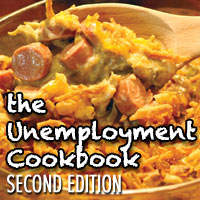
I was able to share the story of how I wrote The Unemployment Cookbook, why I still pick up pennies, and how I drew deeper to God through the Ten Commandments. [By the way, each of these books will be either on reduced price or free at Amazon over the next two weeks. Check out my Amazon Author Page for more information and to order your own copy!]

The Unemployment Cookbook, Second Edition
I was also overly blessed when, during one of my fifteen-minute consultations with a faculty member, I discovered the woman was the director of the conference! I had chosen to meet one-on-one with Kathy Ide, as I’d hoped to pick her brain on freelance editing jobs and other tidbits of go-get-’em-now encouragements. Within a very short time I knew her role was much bigger than a fifteen-minute mentor. Especially when she offered me the opportunity to work social media for the conference.

Kathy Ide and Molly Jo Realy at #OCCWC
Several passing-in-the-hall conversations later, I was invited to draft a proposal to become a faculty member for next year, specializing in social media publicity. I share this not to blow my own horn, as Lisa says, but rather to encourage several simple truths:
- Stay the course. Whatever it takes to get you where you need to be, do it. Don’t give up. No matter how long it takes, if you know you’re on the right path, you know you need to persevere.
- Do what you can to gain experience and a good reputation. Volunteer. Learn. Network. Connect. Communicate. Don’t just go for the “bottom line”. Enjoy the journey!
- God will bless your attempts. When you say “yes”, it doesn’t always mean “now”. It just means you’re willing to let Him lead you. And He will honor your commitment.
Although large and busy, conferences are an intimately personal experience. It’s a chance to meet mentors, get your questions answered, socialize, find like-minded friends. At the least, it’s an opportunity to squirrel yourself away from the distractions of home and everyday life, and allow the day to be just about you and your writing.
You can sit on the steps and journal in quiet. You can join the lunch crowd and talk shop. Attend the different workshops. Whatever your writing goals are, I strongly recommend you meet regularly with other writers. Don’t know any? Check out local colleges and school groups. Put an ad on the local library bulletin board. Tack a card up in Starbucks.

Starbucks: Best Writing Partner EVER.
If you’re serious about writing, attend a conference. If you’re serious about writing for God, attend a Christian conference.
If you have questions about conferences, how to sign up for #OCCWC, or social media publicity, please send me a message.
You can reach me on Facebook, twitter, Google+, and LinkedIn.
And Frankly, My Dear . . . that’s all she wrote!
You may also enjoy reading:
Stop Fighting and Be Still.
Before You Pray
But I’m not good enough to attend a Christian writers conference. . .
My Interview with Ms. New Orleans 2014, Lindsay Reine